Penguin Random House
Role: Strategic design lead (infrastructure and ecosystem strategy)
Goal: Transitioning a global publisher from 700 sites to a unified, scalable ecosystem
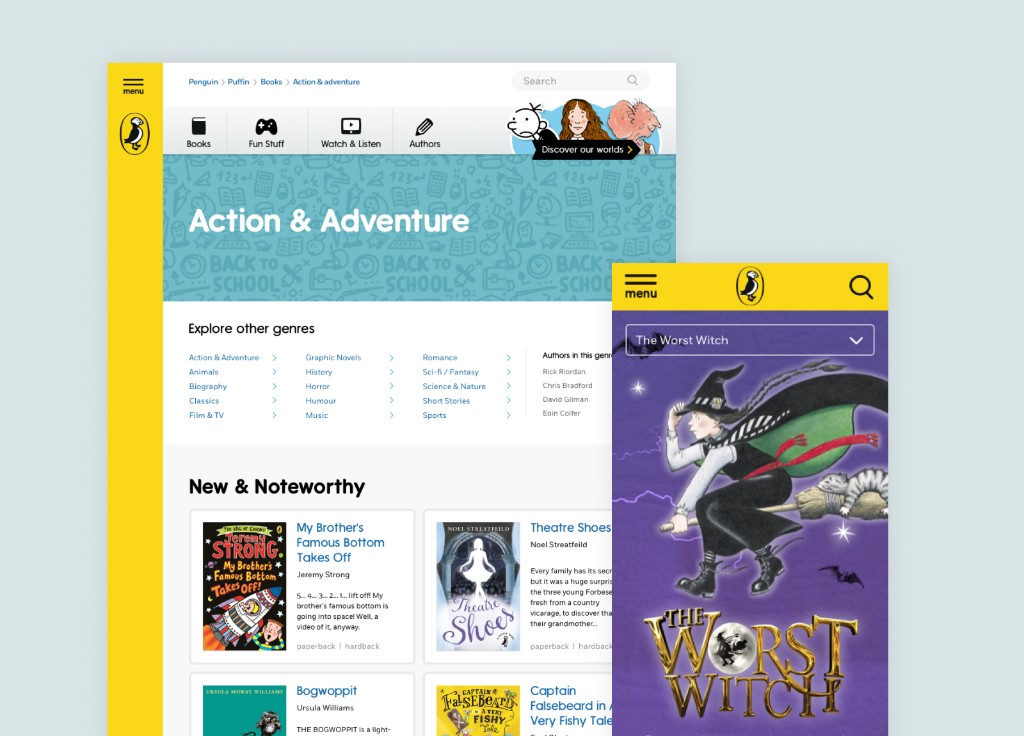
Penguin is one of the largest publishers in the world. Following a global merger with Random House, the two publishers owned and maintained multiple publishing houses and imprints across over 700 websites. The newly formed Penguin Random House faced a significant challenge - how to streamline a vast digital landscape, establish consistent patterns for content and distribution, and enable their brands to flourish, all while continuing to engage their huge readership.
The impact
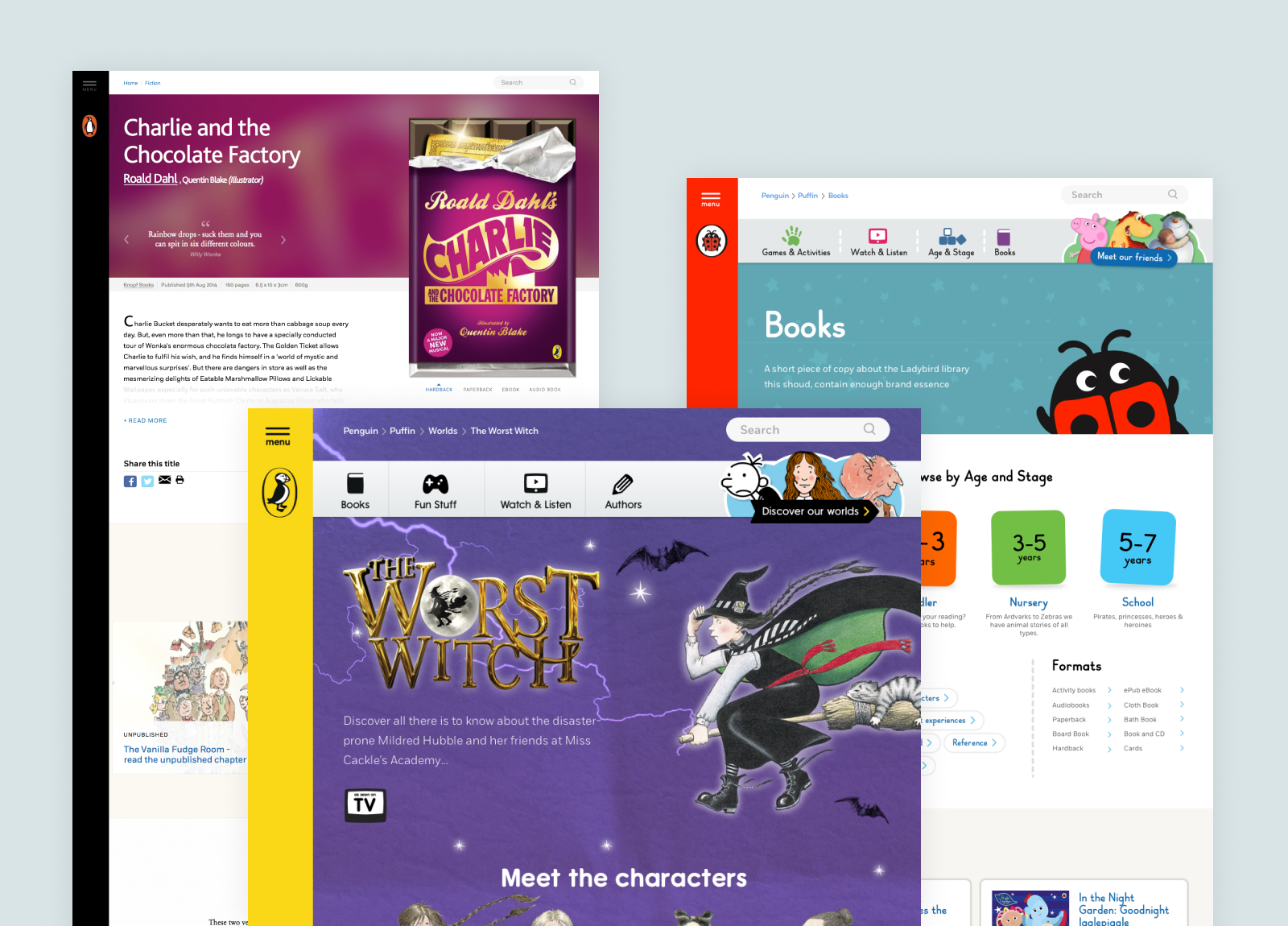
- Proven longevity and scalability The real measure of this work is its endurance - the system remains the foundational infrastructure today, with all imprints still successfully operating under the same model.
- Momentum at scale Moving to a modular environment changed how teams work. Instead of building from scratch each time, they can now deliver brand-specific experiences in a fraction of the time - drawing on a shared component library that’s already been tested and proven.
- Global brand parity We established a standardised, high-trust reader experience across the entire portfolio, proving that moving fast no longer has to mean compromising the brand.
The modernisation challenge
Hundreds of imprints, each with their own tech stack, had quickly accumulated into a significant operational burden. Balancing consistency with each brand’s freedom of expression was starting to show real debt. The shift that changed everything was a simple reframe: we weren’t just building websites, we were moving from owning individual assets to governing a unified ecosystem.
Respecting heritage through scalable expression
While the technical delivery was grounded in code, the project’s real foundation was consensus. My role was to bring global stakeholders together - from heritage imprint heads to senior leadership - around a shared vision of scalable expression. We took care to navigate the rich, complex history of hundreds of individual imprints, making sure the new system honoured that heritage while building a platform for the future. By showing that centralised infrastructure enables creative expression rather than limiting it, we put brand heritage at the heart of the ROI conversation - and replaced the fear of dilution with a model for global consistency.
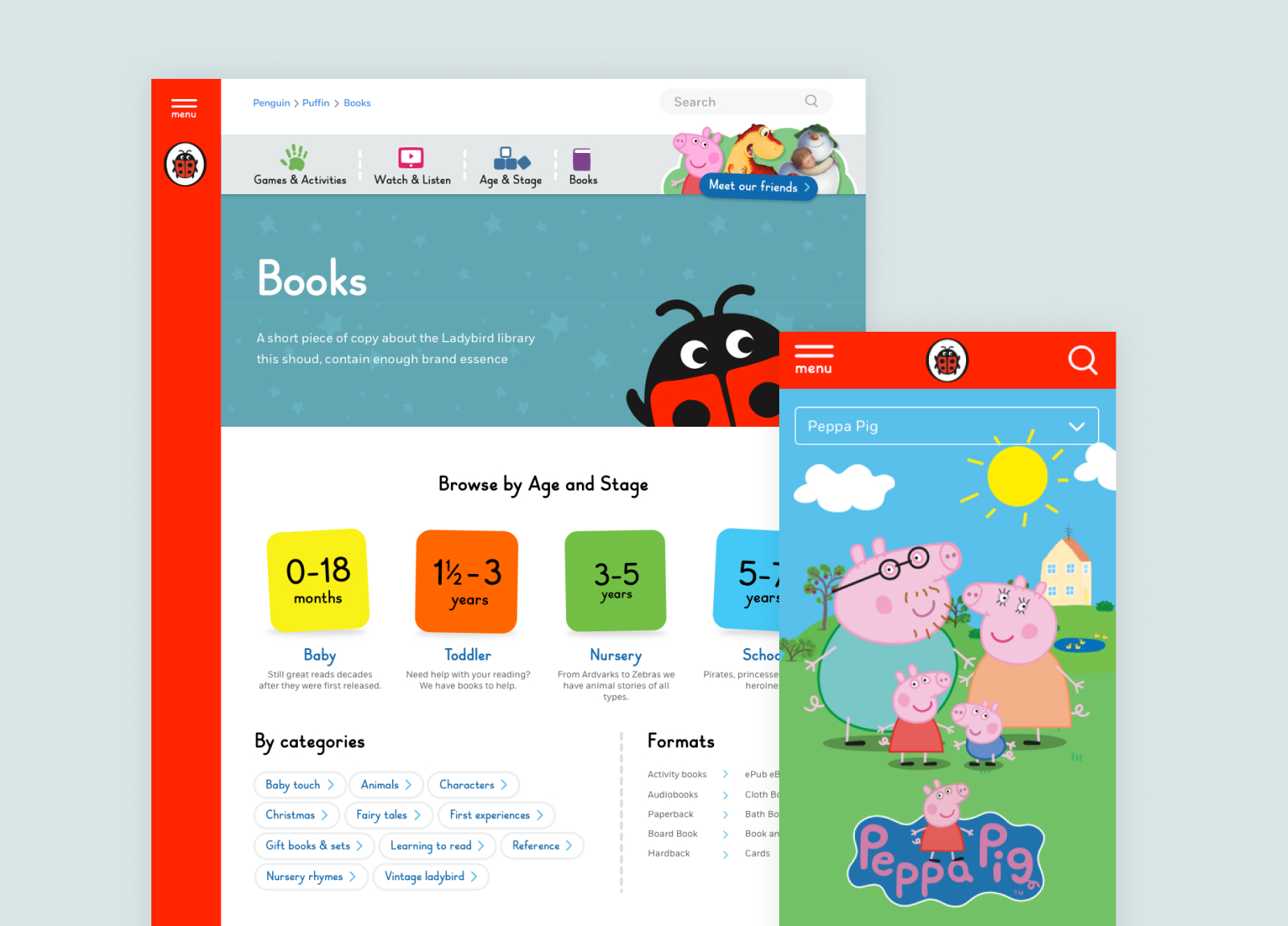
The infrastructure of expression
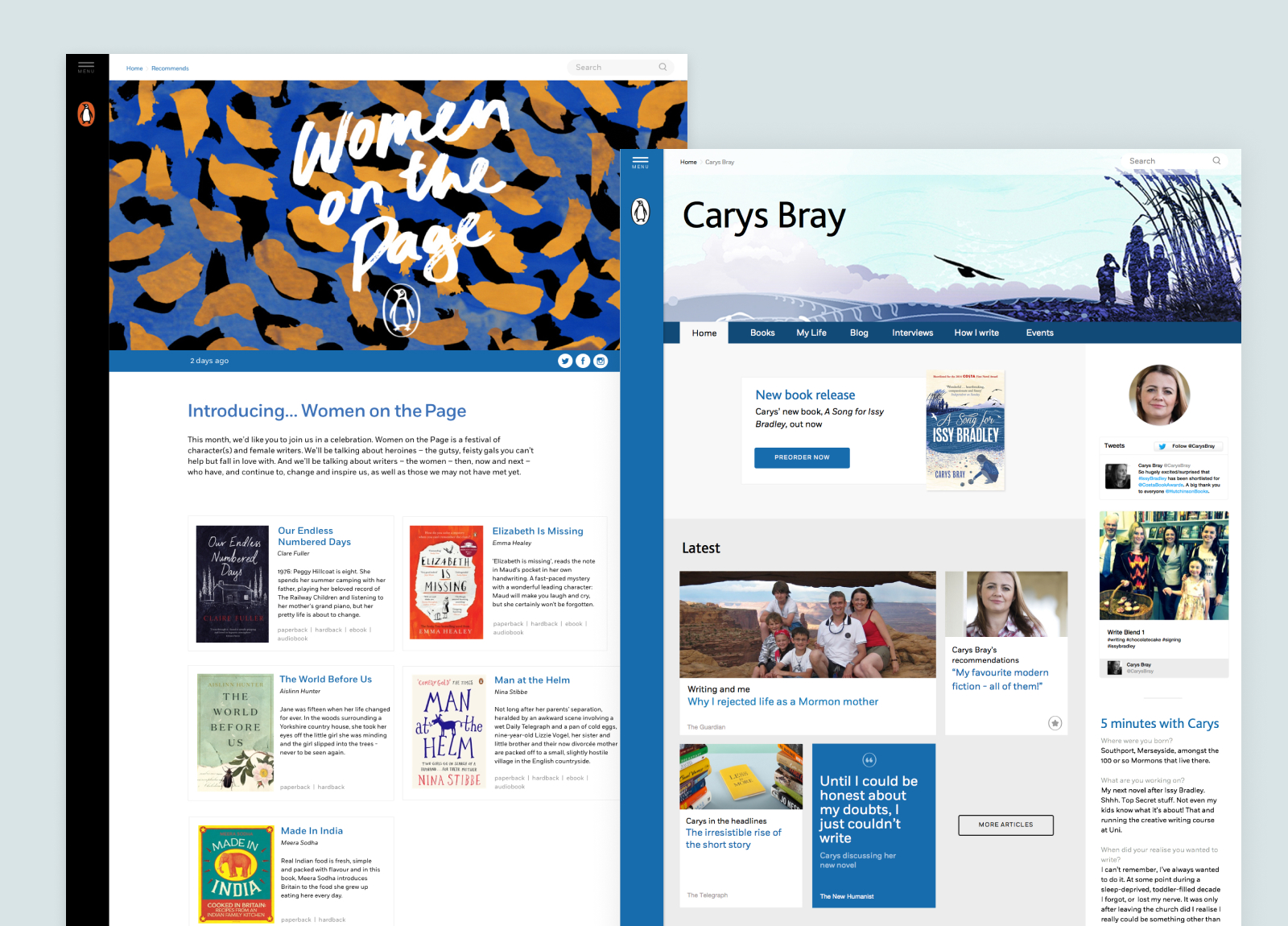
To keep the brand’s voice consistent across 700 sites, we replaced manual page-building with a flexible, automated framework. By designing a system where each site’s layout is driven directly by product and brand data, we removed the heavy lifting from individual teams - allowing the entire ecosystem to scale naturally as the catalogue grows.
What did I do on this project?
- Orchestrated global stakeholder alignment Led workshops with executive leadership and imprint heads to build shared understanding around the shift from asset ownership to ecosystem governance.
- Navigated multi-brand friction Acted as a primary link between the consultancy and 700+ imprints - spending a lot of time helping people see that a shared system gives brands more creative freedom, not less.
- Made the case for design as a business decision Helped shift the conversation away from short-term fixes toward what a well-designed digital estate could unlock long term.
- Steered the modular brand architecture Managed the development of a modular system that supports diverse brand identities within a high-performance, standardised container.
- Was hands-on in the design work This wasn’t just a strategic role - I was actively involved in the design work itself, contributing to the patterns, templates and thinking that shaped the final product.
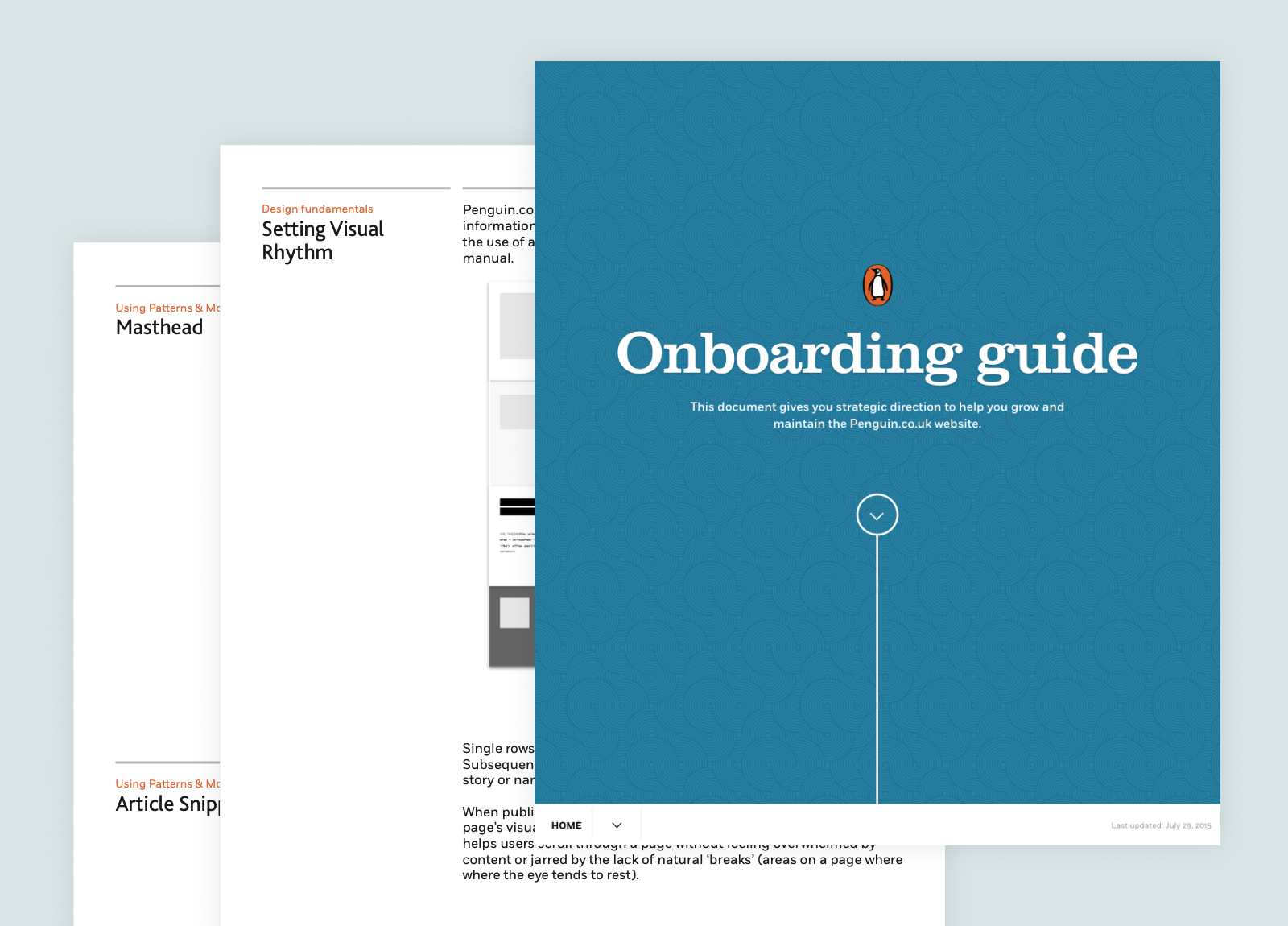
- Shaped the governance playbook Contributed to defining the strategic principles behind the global design governance manual, giving cross-functional teams a clear, lasting way to build on the platform.